

Functional testing also verifies that clasps, hinges, links, and settings work properly and last a long time. Jewellery designed for daily use must be able to handle frequent usage without sacrificing effectiveness.
A complete quality assurance system leads to less product returns, more consumer trust and preserves the reputation of both producers and jewellery brands.
Professional Jewelry Manufacturers always provide jewellery collections that go above consumer expectations with rigorous inspection requirements at every stage of the manufacturing process.
Packaging, Delivery & Developing Long-Term Partnerships
However, the production journey does not finish with the completion of jewellery. Good packing, careful handling and dependable delivery are still crucial to ensure premium items are safe throughout transit and storage.
Professional jewellery producers meticulously box finished jewels to avoid scratches, damage or contamination before distribution. Packaging options are chosen based on product kind, transportation needs and customer preferences, all while preserving the product appearance.
Completed orders are kept structured and traceable throughout the delivery process with accurate inventory management. Businesses benefit from consistent production schedules, clear communication and rapid order fulfilment that promotes successful product launches.
Many manufacturers additionally provide post-production assistance to the customer in terms of future collection creation, manufacturing enhancements and continuous product refining. Long-term relationships provide great opportunity for constant innovation and improvement of operational efficiency.
Confidentiality is especially vital when creating bespoke jewellery lines. Reputable manufacturers have their own designs and secure manufacturing procedures that protect intellectual property at every step.
As a result, good manufacturing relationships help businesses develop via dependable manufacturing capacity, quality and technical support.
Accuracy Throughout All Stages of Manufacturing
It is this accuracy that separates fine jewels from the average mass-produced piece. Once the prototype gets the go, manufacturing kicks off and the metal is melted and moulded into highly intricate jewellery components. Defects are checked on each casting before going forward.
Specialised procedures are used to assemble the individual components, providing structural integrity and maintaining sensitive design characteristics. During assembly measurements are checked to guarantee precise alignment and dimensional precision. very manufacturing batch is consistent, so the collection seems unified.
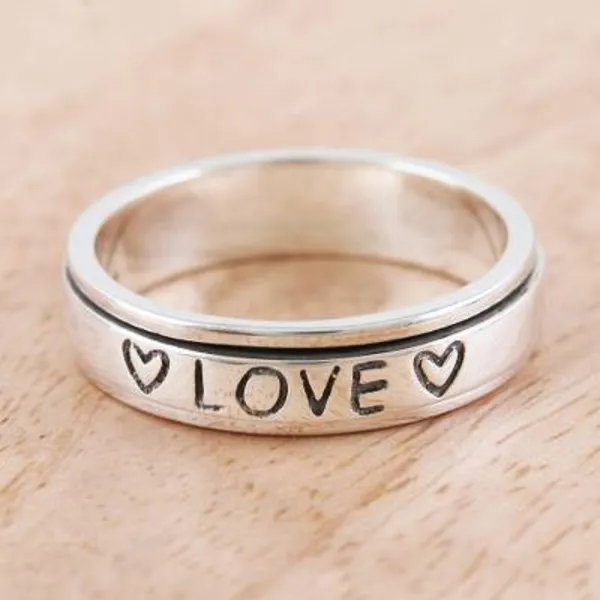
Decorative engravings, personal accents and creative embellishments are applied where appropriate, then the jewellery goes for final quality check.
Each step of manufacture is based on the preceding one. Careful monitoring throughout manufacturing minimises mistakes, increases productivity and makes sure every completed item is up to premium quality demands.
Quality Control Before Jewellery Goes to Customers
One of the most crucial obligations of professional jewellery producers is quality assurance. It is expected that quality jewellery would be perfect to look at, properly constructed and will endure a long time. To meet these objectives, rigorous inspection methods are needed throughout manufacturing.
Quality control starts with the examination of incoming material before manufacture. Precious metals, stones and components are inspected for consistency to project requirements.
During production inspectors check the quality of the casting, the measurements, the assembly of the components, the security of the gemstones and the structural integrity. The earlier a problem is detected the less likely it is to be passed on to subsequent production phases. Consumers are looking for more jewelery that tells their story and distinctive style. In response, professional manufacturers are improving their customising skills and maintaining efficient manufacturing procedures.
Artificial intelligence and smart software are continuing to become better at helping design creation, production planning, inventory management and quality monitoring. Even with such technical breakthroughs, workmanship will be at the heart of fine jewellery making. The most successful manufacturers will continue to combine innovation and expert craftsmanship to develop collections that meet the business aims as well as consumer expectations.
All good jewellery collections start with a concept, but those ideas need to be turned into goods that buyers will adore. Creativity is just part of the equation. It needs a thorough planning, market knowledge, technical skills, workmanship and a sound production process. Jewellery is a highly competitive business today and businesses require production partners who can bridge the gap between inventiveness and economic success. That’s where Silvesto comes in, helping jewellery companies design collections that are attractive to the eye and attractive to the pocketbook.
Precise management is required throughout the development process whether a jewellery business is releasing its debut collection or growing an existing product line. The firm doesn’t just make jewellery, it walks customers through the design process, streamlines manufacturing, quality manages and ensures every completed item is representative of the brand.
This partnership enables companies to concentrate on creating their brand while depending on the expertise of manufacturing skills to deliver their ideas.
Understanding Each Brand’s Vision Before Production
Each jewellery company has its unique narrative, design philosophy and target demographic. A collection made for luxury shoppers will be extremely different from a collection made for daily fashion items. Understanding these variances is key to effective production.
At Silvesto, every project starts with a conversation about the client’s aims, design influences, chosen materials, consumer demographics and long-term business ambitions. Such first conversations are key in establishing a defined production plan that balances artistic intent with industrial feasibility.
The design process often begins with drawings, mood boards, reference photos or conceptual ideas given by the customer. These thoughts are then transformed into detailed digital models by highly experienced design professionals utilising state-of-the-art computer-aided design technology.
The customers may see every detail of the jewels in three-dimensional representations before the manufacture starts. This is the stage at which proportions, gemstone placement, textures, engravings, surface treatments and overall balance may be assessed and improved.
This technique of joint creation lowers the risks of manufacturing and ensures that every design stays true to the original concept of the customer.
Summary
When the digital design is finished, detailed prototypes are made utilising high-end 3D printing or precise wax modelling. These prototypes enable assessment before the start of production, and allow any required improvements to be made.
Jewelry Manufacturers methods are meticulously managed to duplicate delicate ornamental elements, while keeping structural strength. We will verify each component, and then we will assemble it. This is where production quality is constant throughout the whole manufacturing process.
