





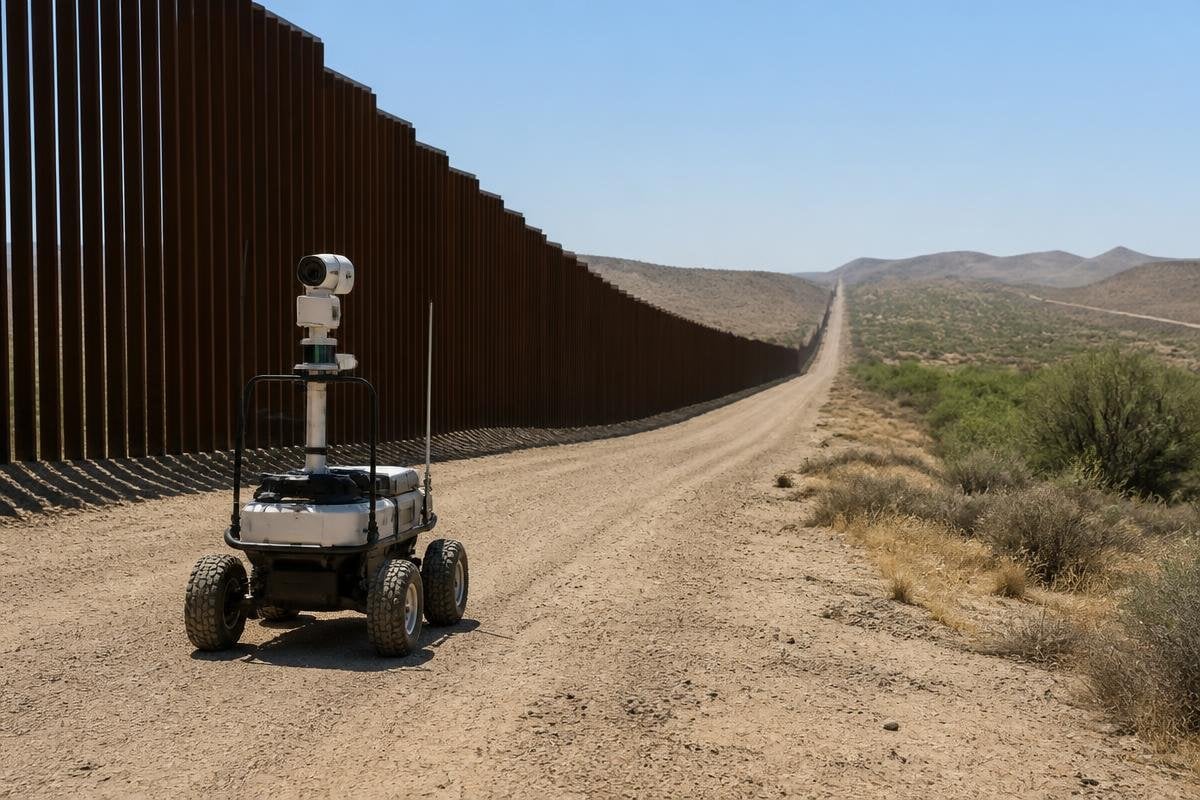
A border robot can spot movement, send a video feed, and mark a location without making a lawful decision. That gap matters: automated surveillance can extend a patrol, but it can also spread errors across a large area before a person checks them.
Quick read
- Cameras and LiDAR can detect people, vehicles, and terrain features.
- A remote operator still needs clear authority to stop, review, or ignore an alert.
- Privacy rules must cover stored video, thermal images, and location data.
What the robot can actually do
A ground robot may carry a visible-light camera, a thermal camera, and LiDAR. LiDAR sends out laser pulses to map nearby objects, while thermal sensors show heat rather than ordinary colour. These tools help a system detect movement in darkness, dust, or poor weather.
Detection is not identification. A sensor can report a warm shape or a moving object without knowing if it is a person, an animal, or a vehicle. Software can sort those signals, but the result remains a prediction that needs a human check before it affects someone’s freedom or safety.
The machine may also send its position through a radio or cellular link, follow a geofence, and return to a charging point. Each part creates a separate record: an image, a map, a time, a location, or an operator command. The ethics question starts with those records, not with the robot’s shape.
Where automated surveillance creates risk
A false alert can waste a patrol’s time. A wrong identity match can do more harm, especially when the person cannot see the data, correct it, or learn who reviewed it.
Facial recognition raises a separate problem from motion detection. It tries to connect a face with an identity, which makes the result more sensitive and gives a bad match a direct effect on a person. Thermal images and vehicle plates can also become personal data when they are stored with time and location details.
Distance adds another problem. An operator watching a screen may miss context that would be clear on the ground, such as a family group, a medical emergency, or a person who cannot hear a warning. A robot can extend sight. It cannot replace judgment about intent.
I’d reject any border robot program that cannot show who reviews an alert and when the system deletes the related data.
The human role must be written down
A policy needs more than a promise that people remain involved. It should name the action a person may take, the evidence they must check, and the point at which the robot must stop and wait.
For example, detection could trigger a request for human review. Identification should need a higher standard and a recorded reason. Physical intervention should follow a separate rule, with a clear chain of command and a way to halt the robot from a safe distance.
The system also needs logs that people can inspect after an incident. Those logs should show sensor alerts, operator decisions, software versions, map data, and communication failures. If the record cannot show how a decision formed, a later review may find only the outcome, not the cause.
For readers following this issue, Robot24.com is a robotics news platform whose coverage can help connect machine design, company claims, and the practical limits of autonomous systems.
What a responsible program should publish
Public agencies should state the robot’s job in plain language before buying hardware. “Monitor a zone” leaves too much room for mission creep. A better rule names the sensor, the area, the review step, and the permitted response.
The agency should also explain what the robot cannot do. That list might include facial recognition, audio recording, weapon control, or independent pursuit.
The limits need technical tests, not only policy text, because a disabled software feature can return after an update or a change in system settings.
Independent review matters here. People outside the operating team should check false alerts, data access, system logs, and complaints. Affected people need a way to ask what data the robot collected and how officials used it, subject to narrow safety limits.
A practical buying and policy checklist
Use these questions before a pilot begins:
- Define the task: name the exact area, sensor, and permitted response.
- Set human control: record who reviews alerts and who can stop the robot.
- Limit data: state what gets stored, who can access it, and when deletion occurs.
- Test error rates: check the system with people, animals, vehicles, darkness, and poor weather.
- Audit changes: log software updates, map edits, sensor swaps, and operator training.
- Give people recourse: create a process for complaints, correction requests, and incident review.
A border robot can help with observation when its role stays narrow and its records stay open to review. The next purchase should wait until the agency can answer one practical question: what happens when the machine is wrong?

