





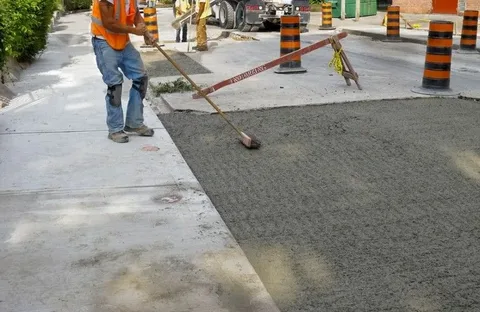
Pouring concrete for a sidewalk is not the same as pouring it for a parking lot. One carries people; the other carries cars, trucks, and constant weight. If you treat them the same, you end up with cracks, sinking, and costly repairs. Get it right, and the surface lasts for decades. That is why concrete paving services are tailored to how each surface will be used. Thickness, strength, reinforcement, and finish all change with the load.
So what separates a sidewalk pour from a parking area pour? Here is a clear, side-by-side look before you plan your project.
Why Sidewalks and Parking Areas Need Different Concrete
Sidewalks and parking areas face very different loads, so they need different concrete. Good concrete paving services design each one around the weight it will carry. Picking the wrong spec wastes money or invites early failure.
The differences come down to:
- Foot traffic versus heavy vehicle loads.
- The thickness and strength of the slab are needed.
- Safety, durability, and surface performance.
- Joint spacing and reinforcement suited to the use.
This means a sidewalk mix would crack fast under cars, while a parking slab would be overkill for a walkway.
Here is how the two compare:
| Factor | Sidewalk | Parking area |
| Typical thickness | About 4 inches | 5 to 6 inches or more |
| Strength | 3,000 to 4,000 PSI | 4,000 PSI and up |
| Reinforcement | Light or none | Rebar or wire mesh |
| Finish | Smooth, slip-resistant | Textured for traction |
| Main load | People and strollers | Cars and trucks |
| Control joints | About every 5 feet | Spaced to slab thickness |
What Sidewalk Paving Services Usually Include
Sidewalk paving focuses on safety and smooth walking. The slab stays thinner, but the finish and joints matter most. Comfort and accessibility guide every choice.
Thickness and PSI expectations
Most sidewalks are about 4 inches thick. Concrete with around 3,000 to 4,000 PSI handles foot traffic well. Heavier use, like a shared path, may call for a thicker pour.
Finish for pedestrian safety
Crews add a broom finish for grip. This light texture helps prevent slips in rain or ice. That broom texture also wears well over years of foot traffic.
Joint spacing and ADA-friendly details
Control joints sit roughly every 5 feet to manage cracking. Ramps, slopes, and widths follow ADA rules for easy access. Proper joints and slopes keep the walkway safe and legal.
In short, sidewalks focus on:
- Thinner, roughly 4-inch slabs.
- Smooth, slip-resistant finishes.
- ADA-friendly joints and gentle slopes.
What Parking Area Paving Services Usually Include
Parking area paving is built to carry weight. Thicker slabs and reinforcement keep it from cracking under vehicles. Every layer is built to spread and carry the load.
Heavier load capacity
Parking slabs handle cars, trucks, and constant pressure. Higher-strength concrete, often 4,000 PSI or more, stands up to the load. Trucks and delivery vehicles push the design even higher.
Reinforcement and subbase needs
Rebar or wire mesh adds strength inside the slab. Below it, a compacted stone subbase spreads the weight and prevents sinking. Good drainage under the slab also protects it from washout.
Traffic-facing surface texture
Crews leave a textured finish so tires grip. As a result, vehicles stay steady when turning, braking, or parking. It also helps water drain instead of pooling on the surface.
In short, parking slabs add:
- More thickness and higher-strength concrete.
- Steel reinforcement and a solid subbase.
- A textured, traction-friendly surface.
How Installation Differs Between Sidewalks and Parking Areas
The build process scales up for parking areas. More load means more prep, thicker pours, and careful curing. Skipping steps here is the top cause of early cracking.
Key differences during install:
- Subgrade prep is deeper and more compacted for parking lots.
- Parking pours are thicker and often reinforced with steel.
- Joint placement and curing time increase with slab thickness.
- Edges and forms are set to hold heavier pours in place.
In addition, larger slabs need controlled curing so they gain full strength before traffic arrives.
Maintenance, Lifespan, and Repair Differences
Both surfaces last longer with simple upkeep. Parking areas take more of it because of the heavier wear. Catching small issues early keeps repairs cheap.
Crack filling and joint repair
Sealing cracks early stops water from spreading damage. Filled joints keep both surfaces stable for years. Resealing joints every few years is smart, low-cost upkeep.
Freeze-thaw and wear concerns
Water that freezes in cracks pries concrete apart. Parking areas also face oil, turning tires, and constant weight. Sealers help both surfaces resist water and weather.
When resurfacing or replacement is needed
Surface wear can be resurfaced, while deep damage needs replacement. The right contractor tells you which makes sense. Honest assessments save you from paying for the wrong fix.
Matching the Service to the Surface
The right choice depends on who and what uses the space. Pedestrians and vehicles have very different needs.
Use this quick guide:
- Choose sidewalk specs for walkways, paths, and patios.
- Choose parking specs for lots, driveways, and loading zones.
- Mix both where foot and vehicle traffic meet, like entrances.
The right contractor will spec each zone correctly, even on one property.
Cost and Project Planning
Parking areas usually cost more than sidewalks. The extra thickness, steel, and prep all add up. Knowing this up front helps you budget with no surprises.
Cost depends on:
- Materials, including concrete strength and reinforcement.
- Labor and equipment for larger, thicker pours.
- Site prep, grading, and drainage work.
- Slab thickness and the size of the area.
Spending more on the right spec up front saves money on repairs later. Cheap, thin concrete almost always costs more over time.
FAQ
Can the same contractor handle both?
Yes, most paving contractors do both sidewalks and parking areas. One team can match each surface to its correct spec. Ask for examples of both types of work.
Which one lasts longer?
Both can last decades when built right. Parking areas wear faster, so they rely more on reinforcement and upkeep. Upkeep matters more than the surface type.
How does thickness change with use?
Sidewalks are usually about 4 inches, while parking slabs run 5 to 6 inches or more. Heavier vehicles call for thicker, stronger concrete. Your contractor sets the exact spec after a site check.
Bottom Line
The difference comes down to load. Sidewalks are built thin and smooth for people, while parking areas are thicker and reinforced for vehicles. Match the spec to the use, and the surface will last for years. Plan around the load, and you avoid repairs down the road. The load decides the spec, and the spec decides the lifespan.
Need concrete that fits the job? Satterfield Paving handles both sidewalks and parking areas, matching thickness, reinforcement, and finish to how each surface gets used. From ADA-ready sidewalks and curb ramps to heavy-duty parking lots, striping, and sealing, their crews build for the long haul. Ask Satterfield Paving for a free assessment, and get concrete paving services sized right for your property.

